
NIBInk under
pressure.

Room
to breathe.
As ink leaves, air takes its place.
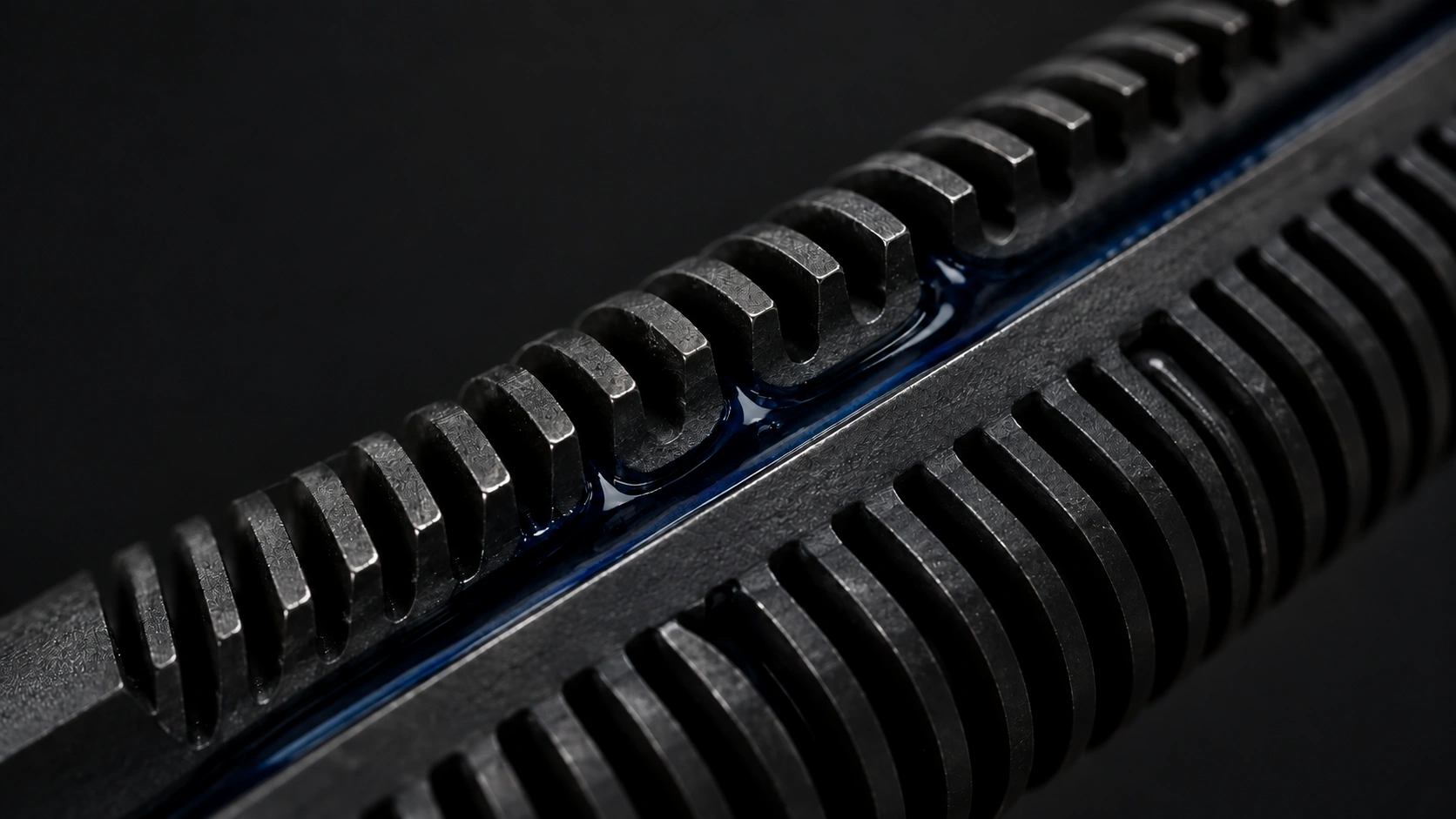
A measured
way through.
Narrow channels guide.
Fine fins hold the excess.
Ink outward.
Air inward.
A quiet exchange keeps the line alive.
Ink moves toward the nib through a fine passage. As ink is used, small amounts of replacement air enter the reservoir through the feed. The two paths work together.
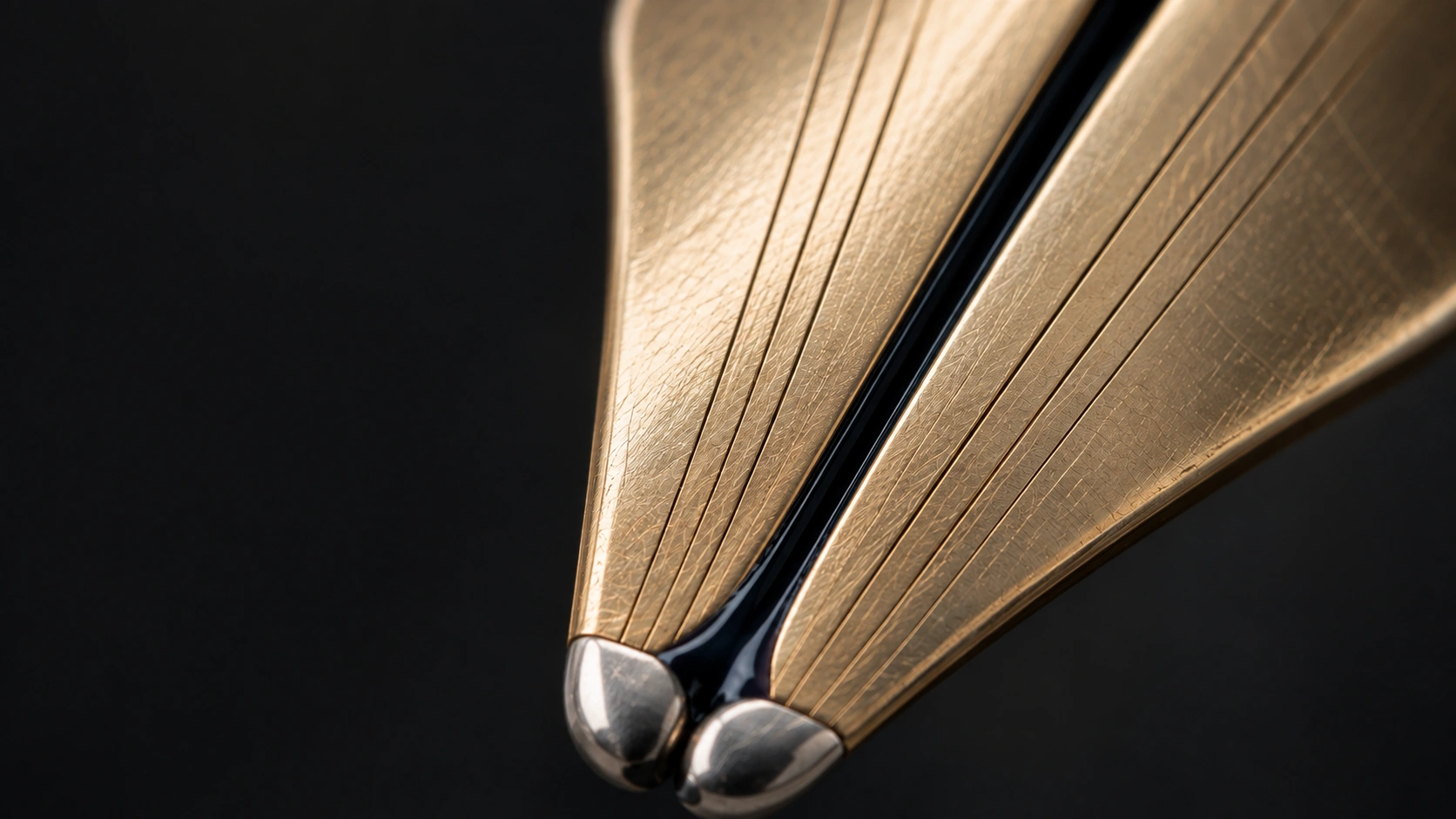
Between
two edges.
A liquid seam. A way to the tip.
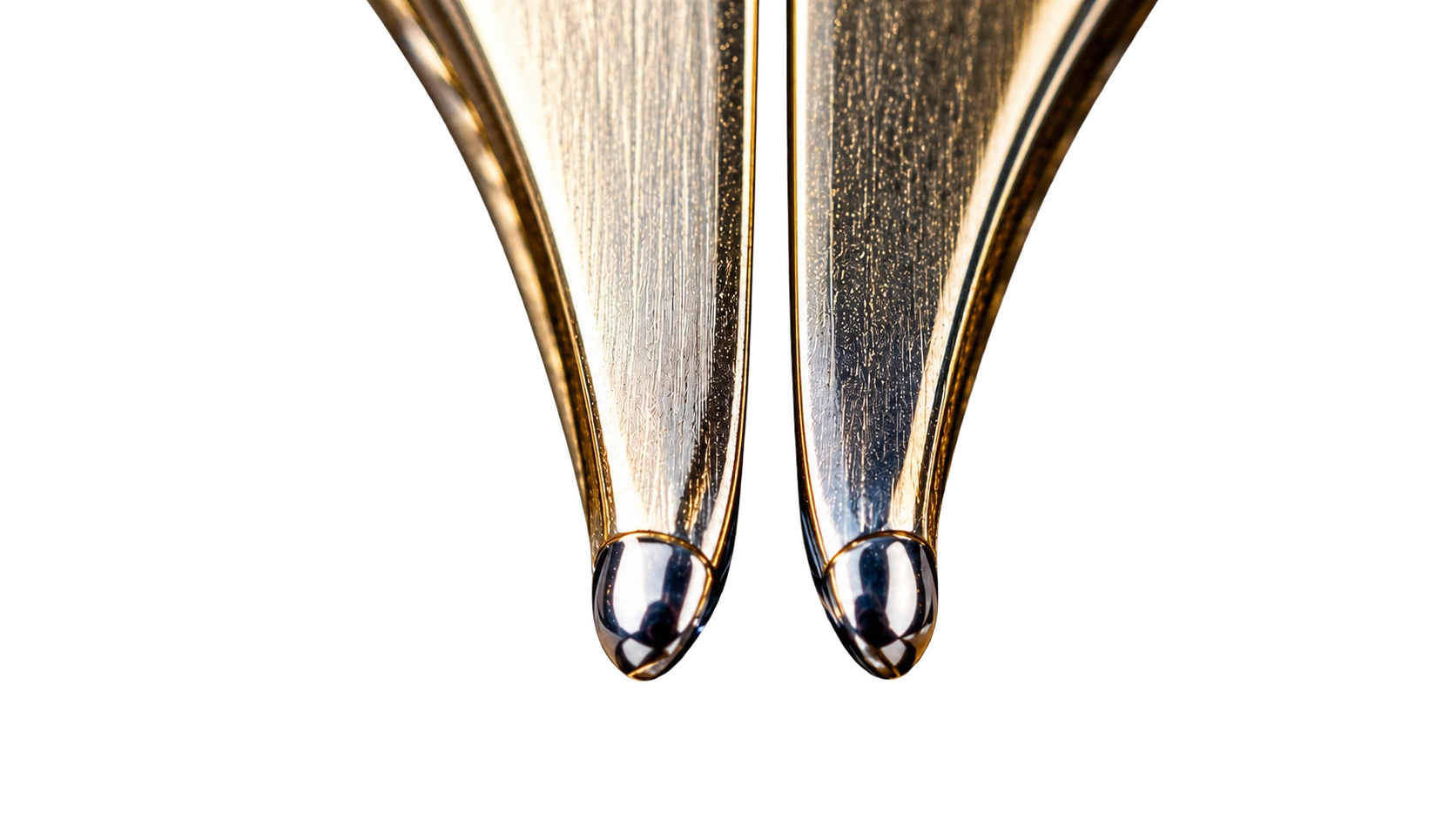
Almost.
Not yet.
Held at the edge of contact.
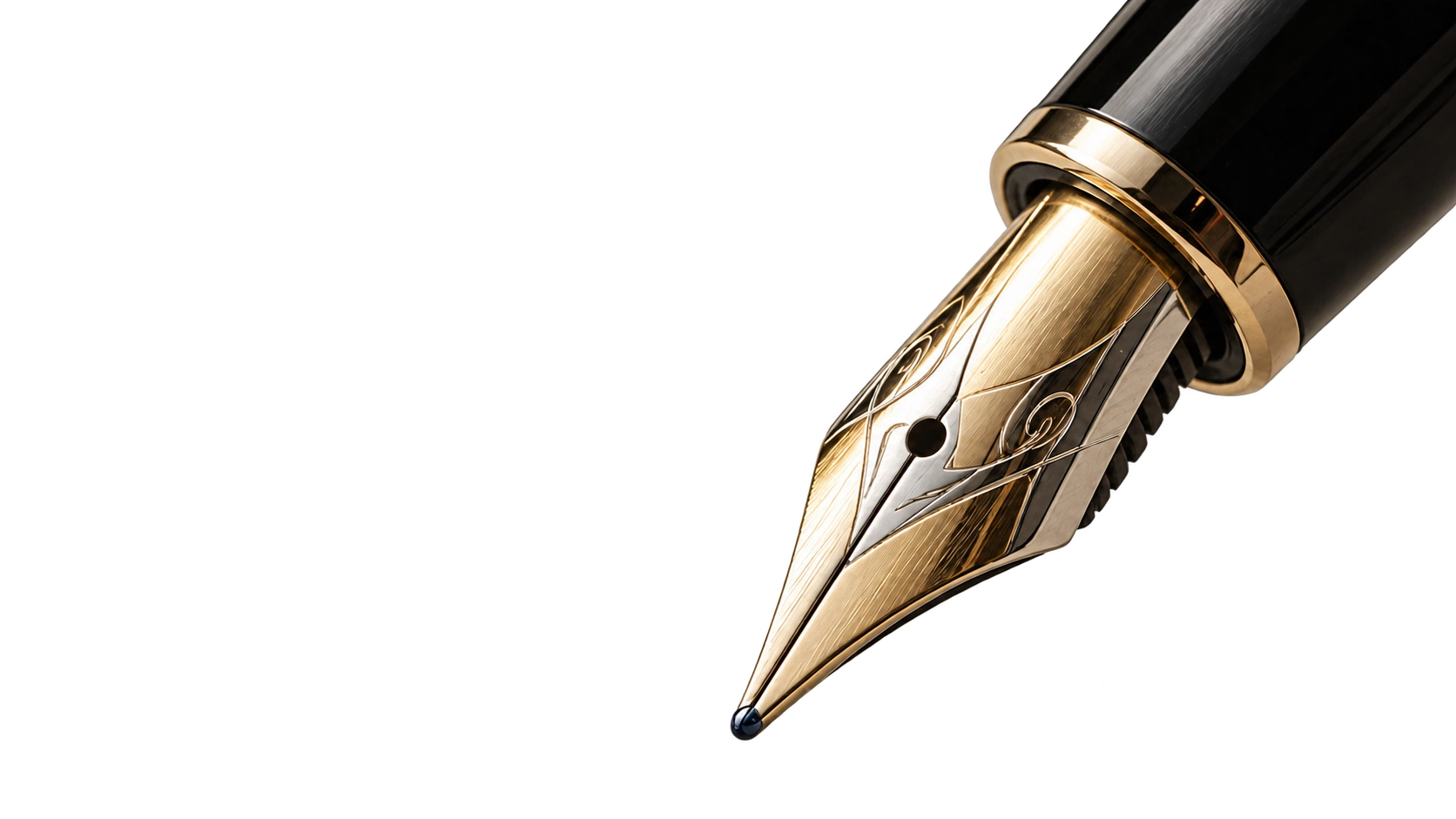
A point
of exchange.
The nib touches. The paper draws.
Drawn
into the grain.
The smallest spaces carry the ink.
Within the narrow stroke, ink enters the spaces between cellulose fibers. Fine branches form along the wet edge.
All of this,
for one line.
A small movement makes the hidden system visible.
The wet reflection fades. The dark line stays in the paper.