FOSSIL
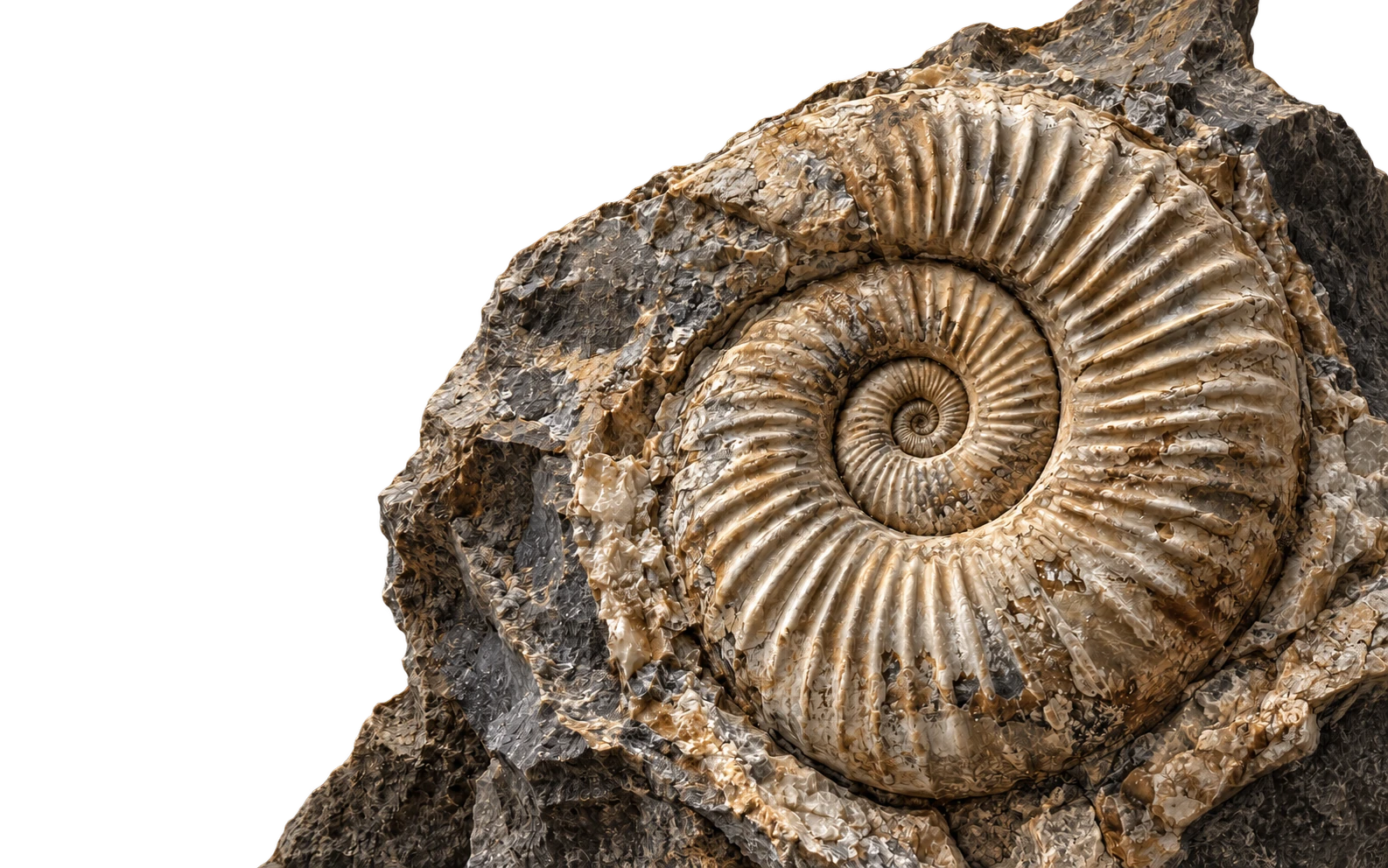
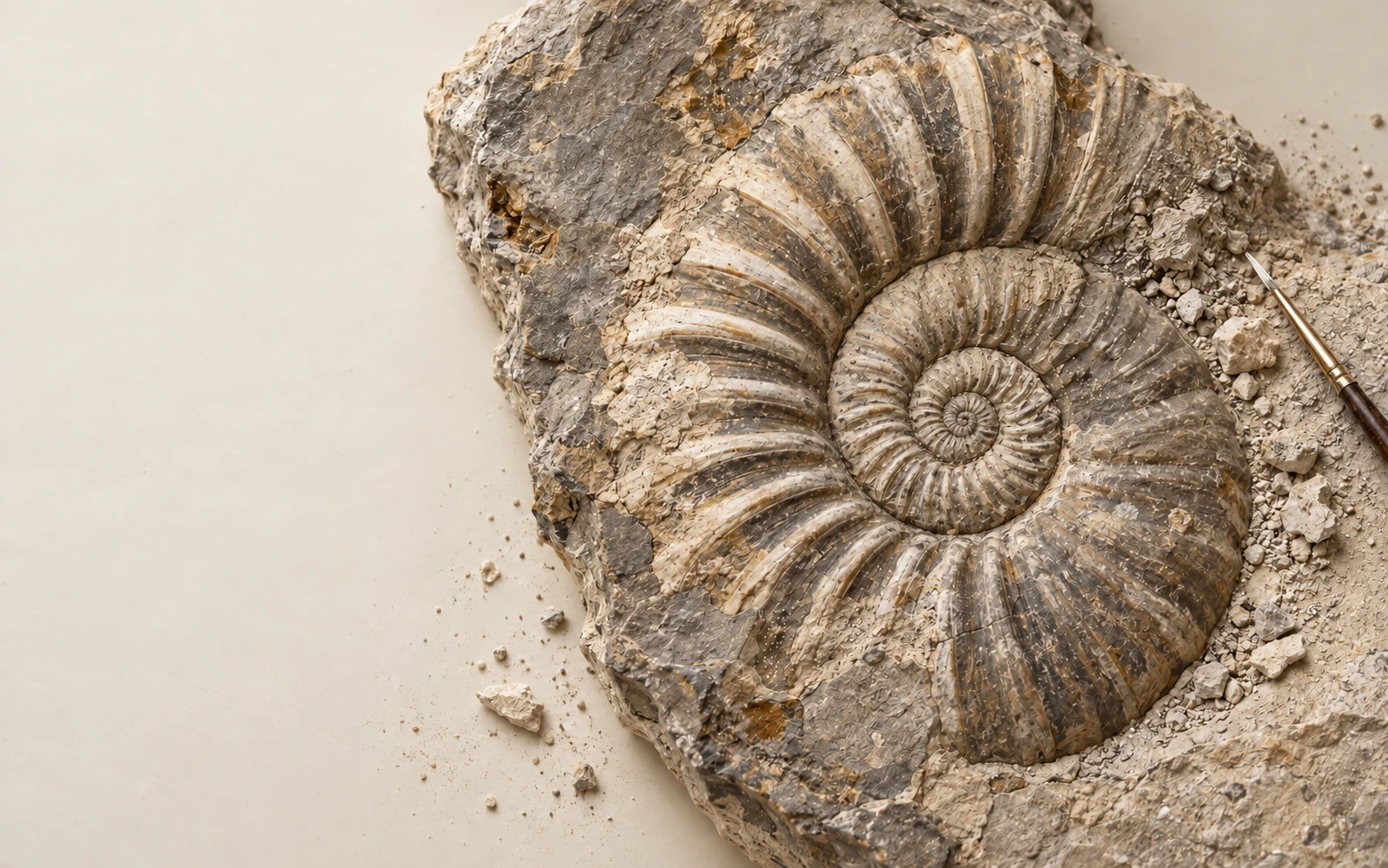
A ribbed ammonite appears at monumental scale, held in irregular limestone under grazing museum light.
Deep timein stone.
Life, held in the quiet of stone.
An exploration of form, preservation
and the traces that remain.
Time is not a clock.
It is a layer.
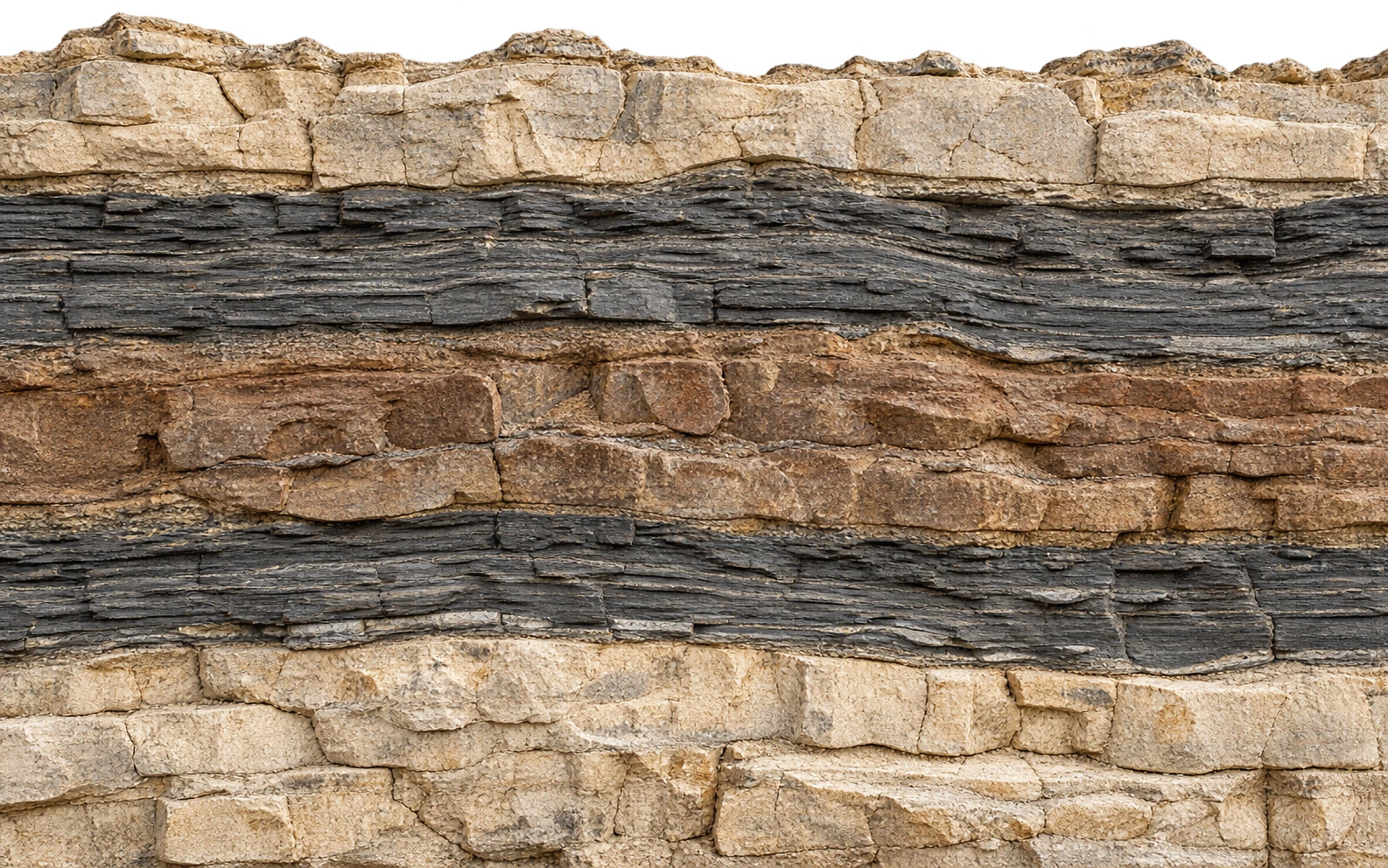
Four irregular beds of limestone, shale and iron-brown sediment settle into a layered record. Their thickness does not measure equal time.
Grain over grain. A surface becomes depth.
Deposition / relative sequence
The surface
closes.
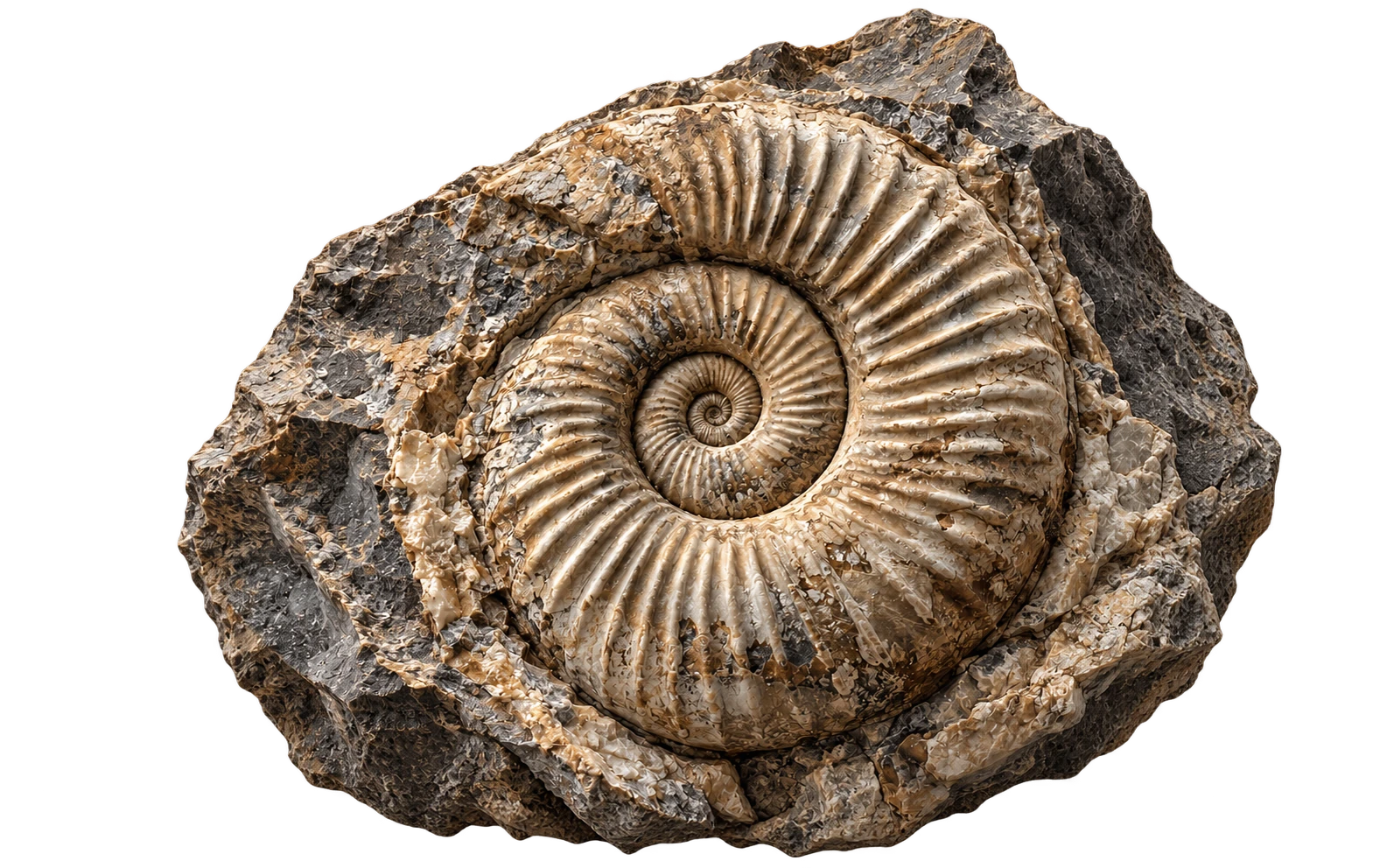
A sediment front gradually covers the ammonite. A faint outline remains in the supporting matrix.
Layer after layer,
a form passes out of sight.
The contour remains. Its visibility changes.
Form leaves.
A record remains.
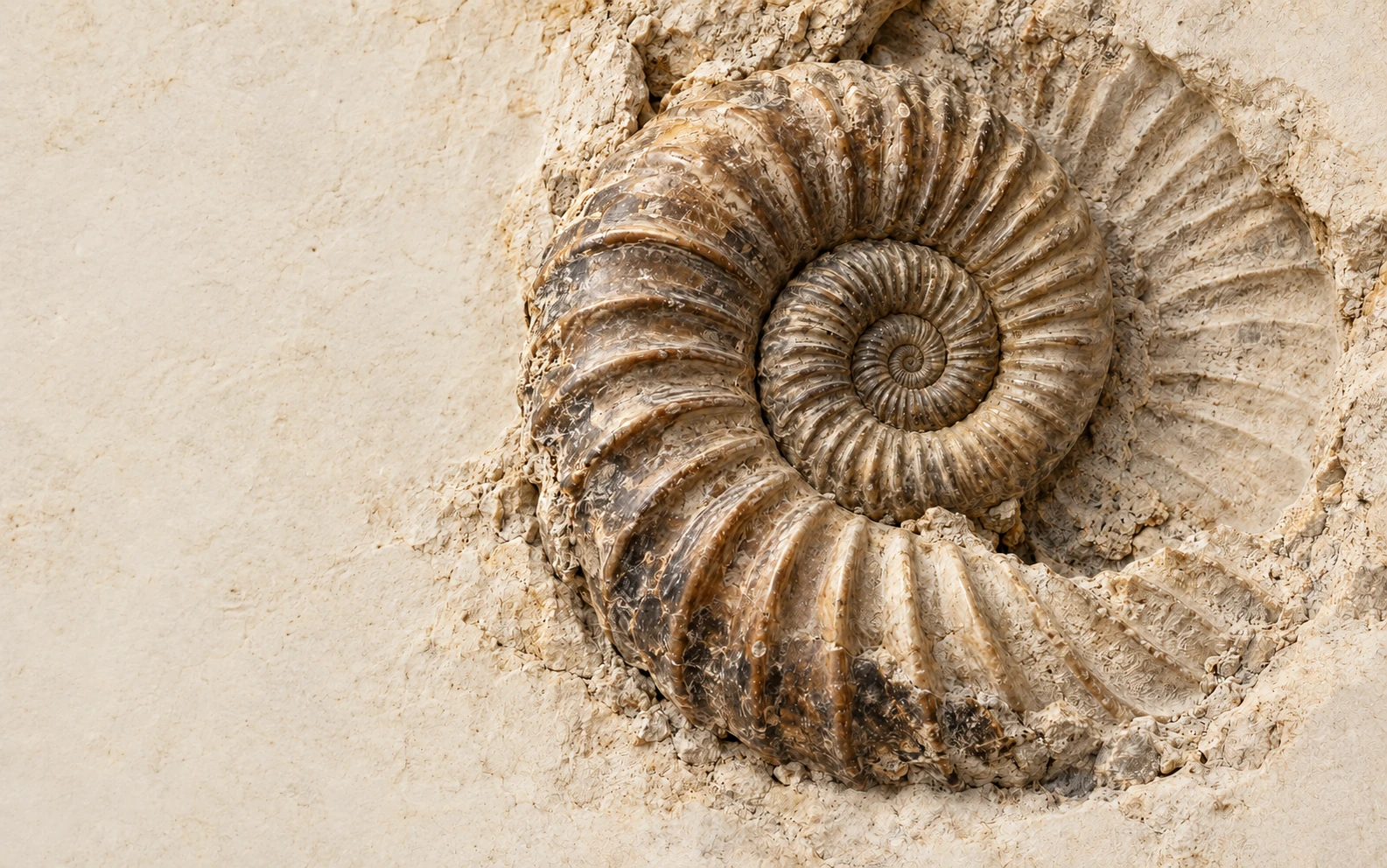
The same shell form is read through pore infill, mineral replacement, a negative mold and a positive cast. Select a pathway below.
Minerals enter the pores.
The structure holds a new material.
Remove less.
Read more.
A preparation plate reveals the shell by clearing small matrix patches and loose dust. Use the slider or inspect the surface to brush the dust.
Clear the loose grains.
Follow the boundary.
Keep the stone that supports the trace.
A little. Pause. Look again.
A different kind
of stillness.
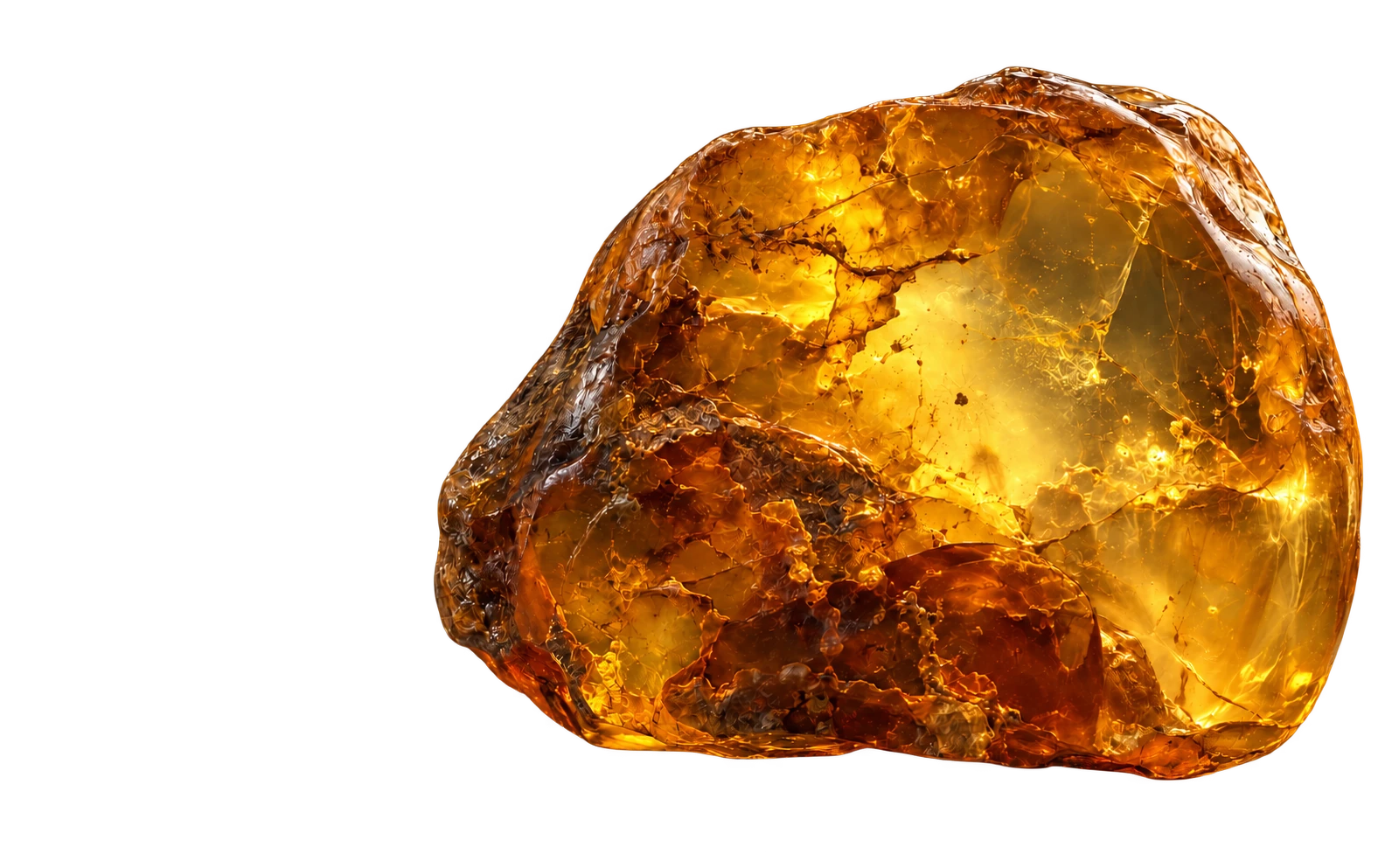
A translucent amber study glows around a minute, indeterminate inclusion. It offers another language of enclosure and preservation.
Fossil resin.
Another language of preservation.
A trace enclosed / Amber study
Read beneath
the surface.
The complete surface gives way to a registered outline and then grayscale sections from an authored synthetic volume. Choose any of the 72 sections below.
Interpretive sections · synthetic volume
Preparing virtual sections. The specimen plate remains visible.
Seventy-two virtual sections reveal the interior of a synthetic ammonite volume. These are interpretive images, not a physical CT acquisition.
A shape returns.
Not a life.
Contours and section planes assemble around an incomplete shell volume. Missing patches remain absent. Switch between outline and volume.
Preparing virtual sections. The specimen plate remains visible.
The gaps remain
part of the record.
Interpretive reconstruction
The same virtual sections form a partial volume. Missing material stays visible as an absence.
The past,
kept present.
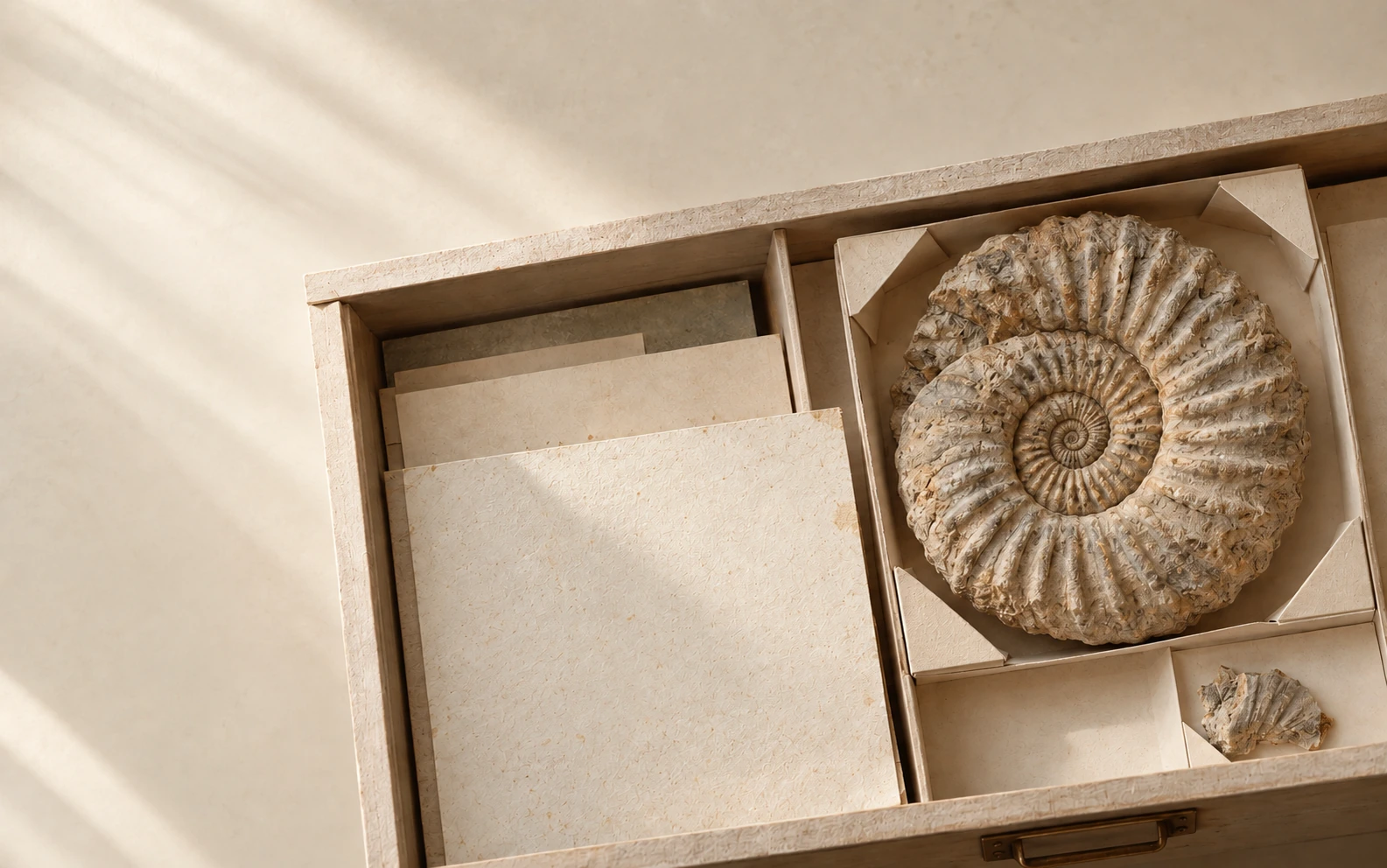
An interpretive specimen rests in a compartmented drawer beside its catalog label. Open the specimen record for provenance and sources.
- Study
- FSL—001
- Form
- Ammonite study
- Record
- Interpretive specimen
- Collection
- Deep Time
Time becomes
evidence.
The opening ammonite returns at a quieter scale. The object is unchanged; its status as evidence has become readable.
The past has not returned.
A trace remains, preserved
and open to question.